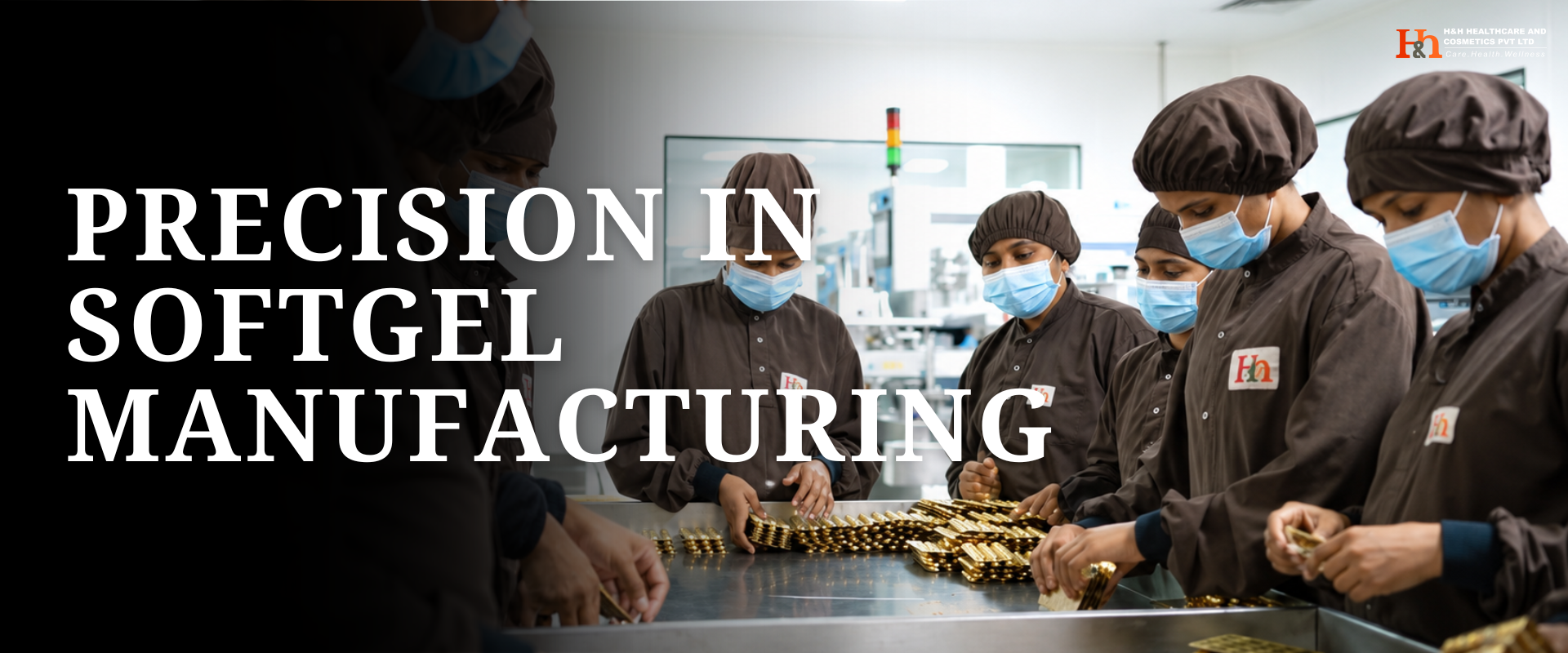
A softgel looks deceptively simple from the outside, a smooth, often translucent capsule that takes seconds to swallow. What happens before that capsule reaches a bottle involves a level of precision that most consumers, and even many people in adjacent parts of the health industry, never fully appreciate.
The process begins with the shell formulation, typically made from gelatin or, increasingly, plant-based alternatives like modified starch or carrageenan for facilities catering to vegetarian and vegan markets. The shell composition needs to be calibrated precisely for thickness, flexibility, and dissolution rate. Too thick a shell, and the capsule may not dissolve properly within the expected digestive timeframe. Too thin and the capsule risks becoming fragile during handling, storage, or transport, leading to leakage or breakage before it ever reaches a consumer.
Simultaneously, the fill material needs to be prepared with equal precision. This is typically an oil-based suspension containing the active ingredients, whether that is a vitamin, an omega-3 concentrate, or a botanical extract. The viscosity of this fill matters significantly, since it needs to flow correctly during the encapsulation process while also remaining stable and free from separation over the product’s intended shelf life. The soft gel capsule contract manufacturing facilities invest considerable time in getting this viscosity balance right, since even minor inconsistencies can lead to uneven fill weights across a production batch.
The actual encapsulation happens through a rotary die process, where two continuous ribbons of gelatin or plant-based shell material are formed around a die that shapes and seals the capsule around the liquid fill simultaneously. This process happens at high speed, producing thousands of capsules per minute in a well-equipped facility, but the speed does not come at the expense of precision. Weight consistency across a batch is closely monitored, since even small variations can affect dosage accuracy from one capsule to the next.
Drying is the next critical stage, and it is often underestimated in terms of how much it affects final product quality. Freshly formed softgels contain excess moisture in the shell that needs to be reduced gradually under controlled humidity and temperature conditions. Drying too quickly can cause the shell to crack or become brittle, while drying too slowly increases the risk of microbial growth during the extended drying period. This stage alone can take several days in a properly managed facility, and rushing it is one of the more common causes of quality issues in softgel production.
Quality testing throughout this entire process checks for fill weight consistency, shell integrity, dissolution time, and microbial safety, among other parameters. Each batch needs to meet defined specifications before it clears for packaging, and any deviation triggers a review rather than an automatic pass. This is the layer of precision that separates a facility genuinely equipped for softgel capsule manufacturing process work from one that treats softgel production as a simple extension of tablet manufacturing, which it fundamentally is not.
For brands considering a softgel-based product, understanding this level of process complexity helps set realistic expectations around both cost and production timelines. Softgel manufacturing genuinely requires more specialized equipment, longer production cycles, and more rigorous testing than many simpler dosage forms, and that complexity is precisely why the format continues to deliver the bioavailability and stability advantages that make it worth the additional investment.
Partner with excellence. Launch your branded supplements today.

India’s trusted CDMO Partner, delivering science-driven solutions across healthcare & cosmetics sectors.
© 2026 H&H Healthcare and Cosmetics Pvt. Ltd. Designed by ROI Makers.