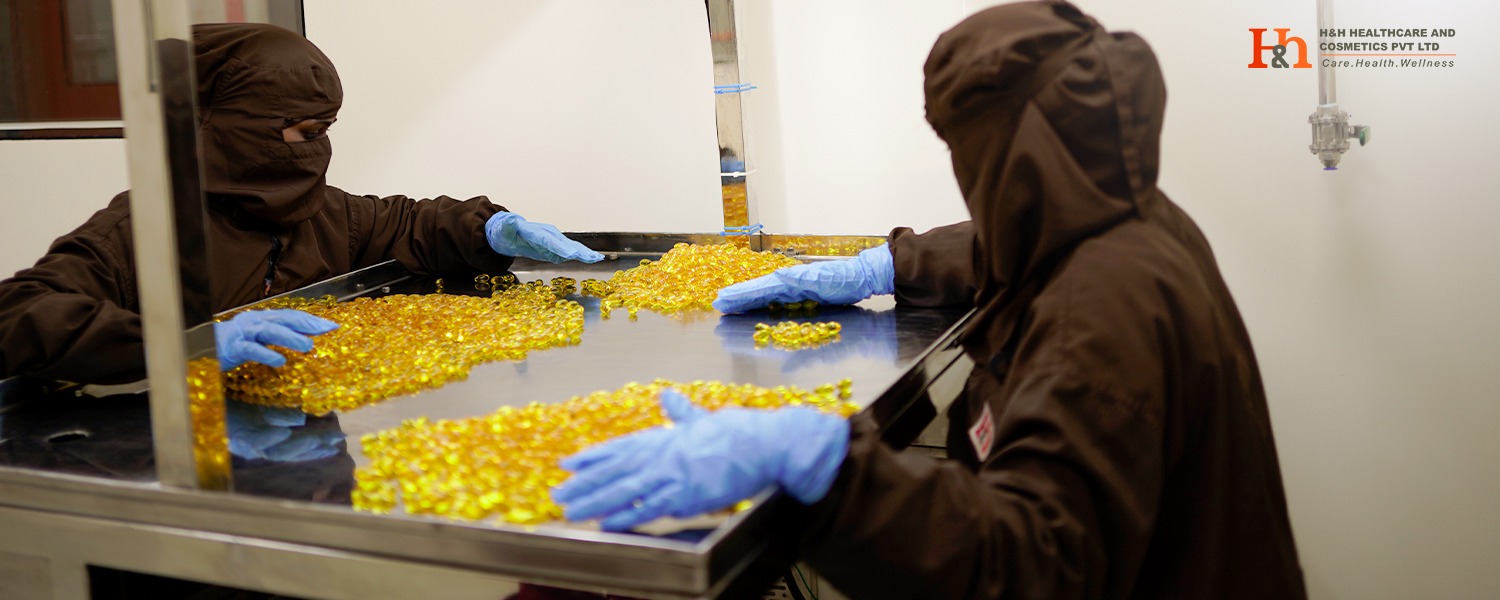
Softgel capsules have become an integral part of the global pharmaceutical and nutraceutical industries due to their superior bioavailability, ease of swallowing, and ability to encapsulate both hydrophilic and lipophilic substances. They offer precise dosage, formulation stability, and aesthetic appeal in product presentation – qualities that make them highly desirable for manufacturers and consumers alike.
In today’s regulated healthcare ecosystem, demand for technically sound and quality-driven softgel production is steadily rising. According to a 2024 market report, the global softgel capsule market is projected to grow at a CAGR of over 6.2% between 2024 and 2030, driven by increasing use of nutritional supplements, pharmaceuticals, and cosmetic formulations.
However, the path from raw material to finished, compliant, and stable softgel capsules requires meticulous process control, scientific precision, and robust quality assurance. This guide explores the complete softgel capsule manufacturing process, highlighting each stage – from raw material handling to encapsulation and drying – to ensure consistent product quality and regulatory compliance.
The process begins with the receipt and quarantine of raw materials. Each ingredient, whether gelatin, glycerin, colorant, or an active pharmaceutical ingredient (API), undergoes strict verification and sampling in accordance with pharmacopeial standards. Materials are dispensed and labeled under controlled conditions, ensuring traceability and compliance with current Good Manufacturing Practice (cGMP).
Once quarantined, each batch is tested for identity, purity, and potency using validated analytical methods. Only after satisfactory test results are received are the materials released for further processing. This stage ensures that every softgel capsule begins its journey with uncompromised input quality.
The Gelatin Melting Room forms the foundation of capsule production. Pharmaceutical-grade gelatin is precisely weighed and melted with purified water, glycerine (as a plasticizer), and approved colorants under controlled temperature conditions. The balance of viscosity, temperature, and humidity is critical, as these parameters influence ribbon thickness, capsule elasticity, and sealing efficiency.
Continuous monitoring ensures a uniform gelatin mass free from bubbles or particulates. This gelatin mass is then transferred through a closed system to maintain sterility and prevent contamination. The prepared gelatin is held in thermostatically controlled storage tanks, ready for the encapsulation phase.
Simultaneously, the Medicine Preparation Room manages the formulation of the capsule fill material. Depending on the product profile, this may range from oils and suspensions to emulsions or semi-solids. The active ingredients and excipients are accurately weighed, mixed, and homogenized using high-shear mixers or colloid mills.
Homogeneity and viscosity are crucial for ensuring dose uniformity across capsules. Each batch undergoes in-process checks to confirm pH, specific gravity, and particle size distribution – parameters essential for capsule stability and bioavailability.
At this stage, collaboration with an experienced soft gel capsule contract manufacturing partner is invaluable. Such expertise ensures process optimization, regulatory compliance, and product reproducibility – critical factors for brands that rely on third-party manufacturers to meet both domestic and international market standards.
Encapsulation is the core of the manufacturing process. This stage uses rotary die encapsulation machines that synchronize two gelatin ribbons with the liquid fill formulation. The fill is accurately injected between the ribbons, forming, sealing, and shaping the capsules in a continuous operation.
Temperature and humidity are strictly controlled, typically maintaining the encapsulation room at 21–24°C and 40–50% relative humidity. Proper environmental control prevents issues such as ribbon sticking, leakage, or seal failure.
Precision at this step ensures each capsule is identical in weight, size, and appearance, maintaining consistent dosage and aesthetic value across batches. The filled capsules are then collected on trays and transferred to the drying stage.
Freshly formed capsules retain residual moisture, typically 25–30%, which must be reduced to around 6–8% for optimal stability. The drying process occurs in two stages — initial tumble drying followed by static tray drying.
In the tumble dryer, capsules are gently rotated under warm, dehumidified air, which removes surface moisture. They are then transferred to drying tunnels or chambers where temperature and humidity are carefully regulated over several days to achieve the final moisture balance.
Uniform drying is essential to prevent capsule brittleness, deformation, or leakage. Once dried, capsules are subjected to comprehensive in-process quality checks, including weight variation, disintegration, and moisture content tests.
Quality inspection is a crucial checkpoint before packaging. Capsules are visually examined under illuminated inspection belts or automated optical sorting systems to identify and remove defective units such as dented, leaking, or misshapen capsules.
Defect-free capsules then undergo a polishing process — typically in rotating drums lined with absorbent material — to remove surface oil and enhance their natural luster. This not only improves the capsule’s aesthetic appearance but also ensures surface cleanliness and packaging compatibility.
For organizations offering nutraceutical contract manufacturing services, this stage is particularly vital, as visual appeal often influences consumer trust and product acceptance in the nutraceutical and wellness markets. Ensuring capsule uniformity and shine reflects both technical competence and quality assurance commitment.
Freshly formed capsules retain residual moisture, typically 25–30%, which must be reduced to around 6–8% for optimal stability. The drying process occurs in two stages: initial tumble drying followed by static tray drying.
In the tumble dryer, capsules are gently rotated under warm, dehumidified air, which removes surface moisture. They are then transferred to drying tunnels or chambers, where temperature and humidity are carefully regulated over several days to achieve the final moisture balance.
Uniform drying is essential to prevent capsule brittleness, deformation, or leakage. Once dried, capsules undergo comprehensive in-process quality checks, including weight variation, disintegration, and moisture content tests.
Quality inspection is a crucial checkpoint before packaging. Capsules are visually examined under illuminated inspection belts or automated optical sorting systems to identify and remove defective units, such as dented, leaking, or misshapen capsules.
Defect-free capsules then undergo a polishing process, typically in rotating drums lined with absorbent material, to remove surface oil and enhance their natural luster. This not only improves the capsules’ appearance but also ensures surface cleanliness and packaging compatibility.
For organizations offering nutraceutical contract manufacturing services, this stage is particularly important, as visual appeal often influences consumer trust and product acceptance in the nutraceutical and wellness markets. Ensuring capsule uniformity and shine demonstrates both technical competence and a commitment to quality assurance.
Once inspected and polished, capsules move to the packaging line. Clean, dust-free bottles or blisters are prepared for filling under laminar airflow conditions. Automated filling machines dispense the exact count per container, followed by capping, labeling, and batch coding.
Every packaged batch undergoes stability and quality assurance testing, including microbial limits, leak detection, and dissolution studies. These tests confirm that the capsules remain safe, effective, and visually stable throughout their intended shelf life.
Conclusion
The manufacturing of softgel capsules is a symphony of precision, technology, and compliance. Each step – from raw material quarantine to final packaging – requires unwavering attention to detail, adherence to regulatory frameworks, and consistent process validation.
For healthcare and nutraceutical brands, understanding this process is key to selecting reliable manufacturing partners who value both science and integrity. As global demand for high-quality dosage forms continues to grow, softgel technology remains a benchmark of innovation, combining efficiency, aesthetics, and patient comfort in a single, perfectly sealed capsule.
Partner with excellence. Launch your branded supplements today.

India’s trusted CDMO Partner, delivering science-driven solutions across healthcare & cosmetics sectors.
© 2026 H&H Healthcare and Cosmetics Pvt. Ltd. Designed by ROI Makers.