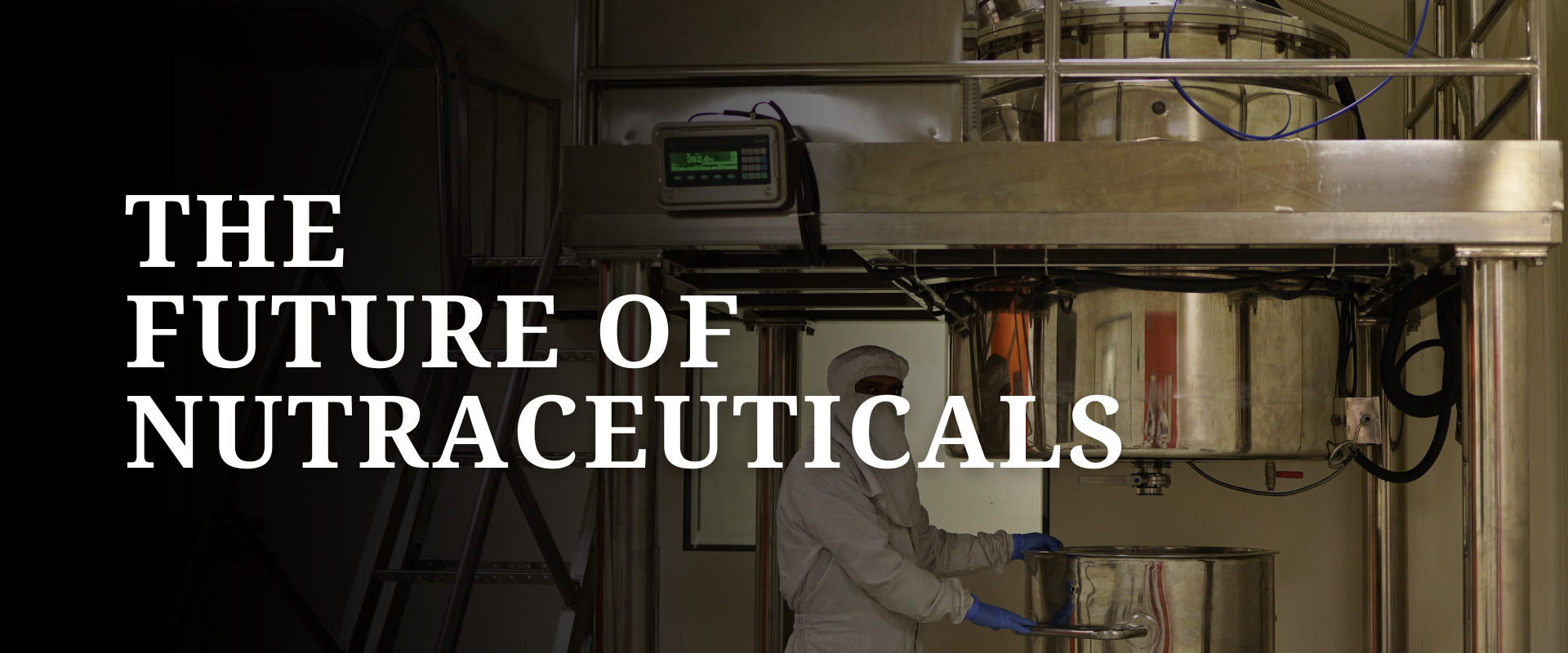
Behind every capsule, sachet, and effervescent tablet that reaches a consumer sits an infrastructure most brand owners never see — and most consumers never think about. It is the manufacturing ecosystem: the facilities, the scientists, the quality systems, the regulatory documentation, and the operational discipline that determines whether a product is safe, consistent, and commercially viable.
This infrastructure is undergoing a fundamental transformation. The nutraceutical contract manufacturing service market is no longer a support function operating in the background of the wellness industry. It has become a strategic axis around which product development, market entry, and brand differentiation increasingly revolve.
Understanding this shift — what is driving it, what it demands, and where it is heading — is essential for any decision-maker responsible for building or scaling a health and wellness product portfolio.
India’s nutraceutical market is projected to reach USD 18 billion by 2025, expanding at a compound annual growth rate exceeding 13 percent. Global figures are more striking: the worldwide nutraceutical market is anticipated to cross USD 700 billion before the end of this decade, driven by aging populations, rising preventive healthcare adoption, and a structural shift in how consumers relate to their own health.
These numbers are frequently cited. What is less frequently examined is what they mean operationally for the contract manufacturing sector specifically.
Market growth of this magnitude does not translate automatically into manufacturing capacity. It creates demand pressure that only a subset of manufacturing organizations — those with the infrastructure, the regulatory standing, and the formulation depth — are equipped to absorb. The nutraceuticals products contract manufacturer that can demonstrate consistent batch quality, multi-format capability, and audit-ready compliance systems across multiple regulatory jurisdictions is not merely a production vendor. It is a market access enabler.
This distinction is shaping how sophisticated brands approach manufacturing partnerships. The evaluation framework has shifted from cost-per-unit to capability-per-partnership. The question being asked in procurement and supply chain conversations at the C-suite level is no longer what a manufacturer charges. It is what a manufacturer can do — and what it can protect.
The logic of contract manufacturing has always been economically sound. Capital that would otherwise be deployed in building and maintaining GMP-compliant production infrastructure — conservatively, tens of crores for a facility of meaningful scale — is redirected toward research, brand development, distribution, and market activation. The manufacturer carries the infrastructure investment. The brand carries the market risk.
What has changed is the strategic depth of what contract manufacturers now offer. The most capable organizations in the nutraceutical contract manufacturing service market today operate across the full product lifecycle — from pre-formulation characterization and stability protocol design through commercial-scale production, regulatory documentation, and post-market surveillance support.
This is a materially different proposition from outsourced production. It is integrated product development, executed by a manufacturing partner with institutional knowledge across ingredient science, dosage form technology, and regulatory frameworks spanning domestic and international markets.
For brands building product portfolios in the nutraceutical space, the implications are significant. A manufacturing partner operating at this level compresses development timelines, reduces reformulation risk at scale-up, and provides regulatory infrastructure that would take years to build internally. The opportunity cost of not engaging such a partner — measured in delayed market entry, quality inconsistencies, or regulatory complications — is often invisible until it becomes expensive.
One of the most consequential developments in the nutraceutical space is the increasing sophistication of formulation requirements. The era of simple vitamin tablets and generic protein powders occupying the premium positioning is ending. Consumers, informed by digital health platforms, clinical research accessibility, and category maturation, are demanding products with demonstrable mechanisms of action, bioavailability evidence, and ingredient transparency.
This demand is reshaping what a nutraceuticals products contract manufacturer must be capable of delivering. Bioavailability enhancement — through liposomal encapsulation, phospholipid complexation, nanoparticle technology, or co-factor optimization — is transitioning from a differentiating feature to a baseline expectation in premium categories. Taste masking for inherently bitter botanical actives, moisture control for hygroscopic compounds, and enteric coating for acid-sensitive ingredients are formulation competencies that directly determine whether a product succeeds in its category.
Managing this complexity at commercial scale — maintaining formulation performance across batch sizes from pilot to production, across raw material lot variability, and across seasonal fluctuations in botanical ingredient composition — requires process engineering capability that goes well beyond standard blending and encapsulation.
The manufacturing organizations that have invested in this formulation depth are pulling away from those that have not. The gap is widening, and it is becoming visible in product performance outcomes.
Regulatory compliance is routinely described as a cost of doing business in nutraceutical manufacturing. This framing significantly underestimates its strategic value.
A manufacturing facility that has successfully navigated USFDA inspections, earned WHO-GMP certification, achieved BRCGS accreditation, and maintained FSSAI compliance has built a regulatory infrastructure that functions as a competitive moat. Each certification represents an independent, rigorous audit of quality systems, documentation practices, and process controls. Each successful audit is an external validation that the facility operates to a standard that cannot be easily replicated.
For brands entering regulated international markets — the United States, the European Union, the United Kingdom, the Gulf Cooperation Council — the regulatory standing of their manufacturing partner directly determines the credibility of their market entry. A facility that cannot provide a Certificate of Manufacture accepted by target market regulators, or whose documentation systems cannot support a health claim submission, is not a viable partner for global ambitions regardless of its production cost.
The most strategically valuable manufacturing partnerships in the nutraceutical space today are those where the manufacturer’s regulatory infrastructure functions as an extension of the brand’s own compliance capability — not a liability that requires management.
India’s pharmaceutical manufacturing credentials are well established. The country supplies approximately 20 percent of global generic medicines by volume and serves as a primary manufacturing base for companies across North America, Europe, and emerging markets. What is less appreciated is how systematically this pharmaceutical manufacturing discipline has been applied to the nutraceutical and wellness manufacturing space.
Facilities built to pharmaceutical GMP standards, staffed by formulation scientists and analytical chemists trained in pharmaceutical-grade quality systems, and equipped with analytical infrastructure — HPLC, mass spectrometry, atomic absorption spectroscopy — that exceeds nutraceutical regulatory requirements are increasingly being deployed for nutraceutical contract manufacturing.
The result is a manufacturing ecosystem where nutraceutical brands can access quality systems, formulation expertise, and regulatory infrastructure that would be prohibitively expensive to build in Western markets, at a cost structure that makes the economics of premium product development viable.
This convergence of pharmaceutical-grade manufacturing capability and nutraceutical category growth is what is driving the accelerating interest in Indian nutraceuticals products contract manufacturer partnerships from global brands that would previously have considered only European or North American manufacturing options.
H&H Healthcare and Cosmetics operates within this evolving landscape with a clear operational mandate: to function as a manufacturing partner that contributes to brand success across the full product lifecycle, not merely at the production stage.
The facility in Pithampur, Madhya Pradesh — 15 acres, USFDA registered, certified under BRCGS, NSF GMP, FSSC 22000, SEDEX, and FSSAI — represents the physical infrastructure of this mandate. Eight production lines running at full operational capacity across more than 100 active SKUs represents its current commercial reality.
The formulation development, regulatory documentation, and quality release systems operating within that infrastructure represent its strategic value to the brands that choose to manufacture through it.
The nutraceutical contract manufacturing service market will continue to consolidate around organizations that can demonstrate capability depth, regulatory breadth, and formulation sophistication simultaneously. The manufacturers that invested in quality systems, analytical infrastructure, and regulatory relationships during the current growth phase will be structurally advantaged as market complexity increases.
For brands making manufacturing partnership decisions today, the evaluation horizon should extend well beyond the current product pipeline. The partner selected now will shape what is possible in three, five, and ten years — in terms of product formats that can be developed, markets that can be accessed, and quality standards that can be maintained at scale.
Manufacturing, in this context, is not a cost center to be optimized. It is a capability platform to be chosen with the same strategic rigor applied to any long-term competitive investment.
Partner with excellence. Launch your branded supplements today.

India’s trusted CDMO Partner, delivering science-driven solutions across healthcare & cosmetics sectors.
© 2026 H&H Healthcare and Cosmetics Pvt. Ltd. Designed by ROI Makers.