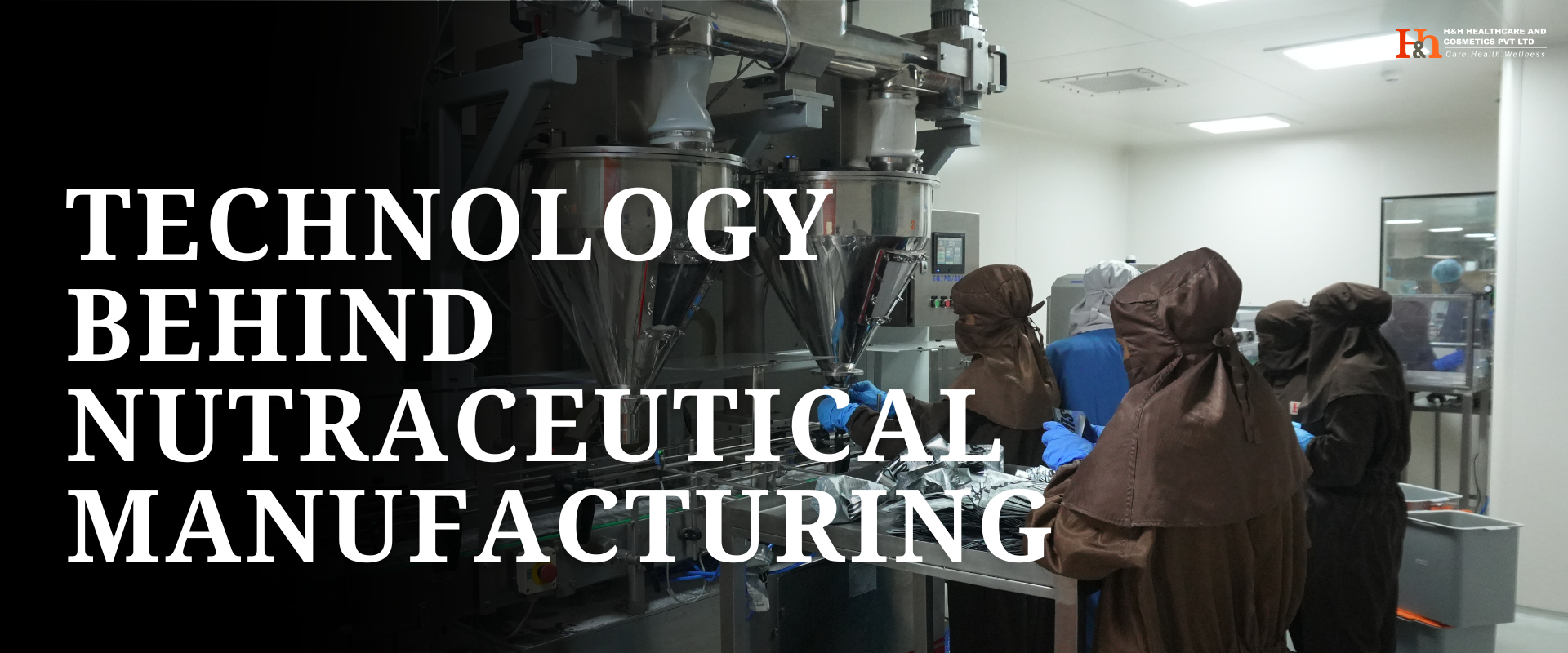
Most conversations about supplement manufacturing stay at the surface — certifications listed, dosage forms mentioned, capacity numbers quoted. What rarely gets examined in enough detail is what actually happens inside a production facility — the machinery, the processing systems, the quality infrastructure, and the engineering decisions that determine whether a finished product is consistent, stable, and fit for the market it is being sent into.
For brands making manufacturing partnership decisions, understanding the technology layer is not a technical indulgence. It is a commercial necessity. Because the gap between a facility that produces supplements and one that produces supplements reliably, at scale, across multiple formats, to exacting quality standards, is almost entirely a function of what the machinery is and how it is operated.
Tablet compression is one of the most technically demanding operations in solid dosage form manufacturing. A rotary tablet press operating at production scale can output between 100,000 and 1,000,000 tablets per hour, depending on the machine configuration, punch count, and formulation characteristics. At those speeds, variables including granule flow rate, compression force consistency, tablet hardness, friability, and weight uniformity must be maintained within tightly controlled tolerance bands simultaneously.
Modern high-speed tablet presses incorporate force monitoring systems that measure compression and ejection forces on every punch stroke, with automated rejection mechanisms removing tablets that fall outside specification without stopping the production run. Pre-compression stages reduce air entrapment in granules before main compression — a step that significantly affects tablet hardness consistency and disintegration time. For brands whose product claims depend on consistent dosing accuracy, the technical specification of the tablet press and its process controls are not background information. They are the mechanism by which those claims are delivered.
Granulation — the upstream process that prepares powder blends for compression — carries equal technical weight. Wet granulation using high-shear granulators produces granules with superior flow characteristics and compressibility compared with direct compression of powder blends, but requires precise control of binder addition rates, impeller speed, and endpoint determination to produce consistent granule size distribution. Fluid bed granulation and drying systems combine granulation and moisture removal in a single process step, reducing handling and the contamination risks that inter-process transfer introduces.
Capsule filling technology has advanced substantially beyond the manual operations that characterised early nutraceutical production. Modern fully automatic capsule filling machines handle separation, filling, and closing of hard gelatin or HPMC vegetarian capsules at outputs exceeding 150,000 capsules per hour, with in-process weight checking systems that verify fill weight within milligrams of specification. For hygroscopic ingredients or those with bioavailability sensitivity — omega-3 compounds, fat-soluble vitamins, certain botanical extracts — softgel encapsulation using rotary die technology provides hermetic sealing that protects fill material from oxidation and moisture ingress throughout the product’s shelf life.
Softgel manufacturing involves the simultaneous formation of the gelatin shell and encapsulation of the fill material in a single continuous operation. The gelatin ribbon is formed, filled, and sealed using a rotary die press where the die cavity dimensions determine capsule shape and fill volume with precision measured in microlitres. Fill formulation development for softgels is technically demanding — solubility, viscosity, and chemical compatibility between the fill material and gelatin shell must be validated before production, and stability studies must confirm that no migration of fill components into the shell occurs across the intended shelf life at the intended storage conditions.
The analytical infrastructure surrounding production determines whether quality is monitored or merely assumed. High-performance liquid chromatography (HPLC) systems enable quantitative verification of active ingredient content against label claim — the confirmation that what the label states is what the capsule or tablet contains. Microbiological testing laboratories verify total viable count, yeast and mould counts, and the absence of specified pathogens in both raw materials and finished products. Dissolution testing apparatus replicates gastric and intestinal conditions to verify that active ingredients are released at the rate and location the formulation intends.
This is the technical reality that separates manufacturing partners capable of supporting serious brand development from those capable of producing a product that looks correct but cannot withstand independent verification. For brands considering the broader context — the nutraceutical contract manufacturing service market 2026 is projected at USD 218.34 billion globally, growing at 12% annually — that distinction matters more as competition intensifies and regulatory scrutiny of label claims tightens across markets.
Packaging line technology closes the production process with equal importance. Automated blister packing lines, bottle filling and capping systems, induction sealing units, and vision inspection systems that verify label placement, seal integrity, and fill level operate as the final quality checkpoint before the product leaves the facility. Nitrogen flushing during bottle filling displaces oxygen from the headspace, extending shelf life for oxidation-sensitive formulations. Desiccant insertion systems maintain moisture control in packaging that will traverse supply chains across varying humidity conditions.
For brands evaluating a 3rd party contract manufacturer, the practical implication of this technical depth is straightforward: ask for a facility tour, not just a capabilities brochure. The difference between a facility describing multi-format production capability and one demonstrating dedicated, purpose-built production lines for each dosage form — with the analytical infrastructure to verify output quality at every stage — becomes immediately apparent when you can see the actual machinery, its age, its automation level, and how process documentation is generated and maintained in real time.
H&h Healthcare and Cosmetics Pvt. Ltd. operates fully automated packaging lines alongside dedicated production infrastructure for tablets, capsules, powders, and softgels — with a facility investment exceeding ₹50 crore that reflects the kind of long-term infrastructure commitment that production consistency at scale demands.
Conclusion
Manufacturing quality is not a policy. It is an engineering outcome — produced by specific machines, operated by trained personnel, within documented processes, verified by analytical systems that generate objective evidence of what the product contains and how it performs. For brands making partnership decisions in a market growing as rapidly as nutraceutical contract manufacturing currently is, understanding what those machines are and how they work is not optional knowledge. It is the foundation of an informed decision.
Partner with excellence. Launch your branded supplements today.

India’s trusted CDMO Partner, delivering science-driven solutions across healthcare & cosmetics sectors.
© 2026 H&H Healthcare and Cosmetics Pvt. Ltd. Designed by ROI Makers.