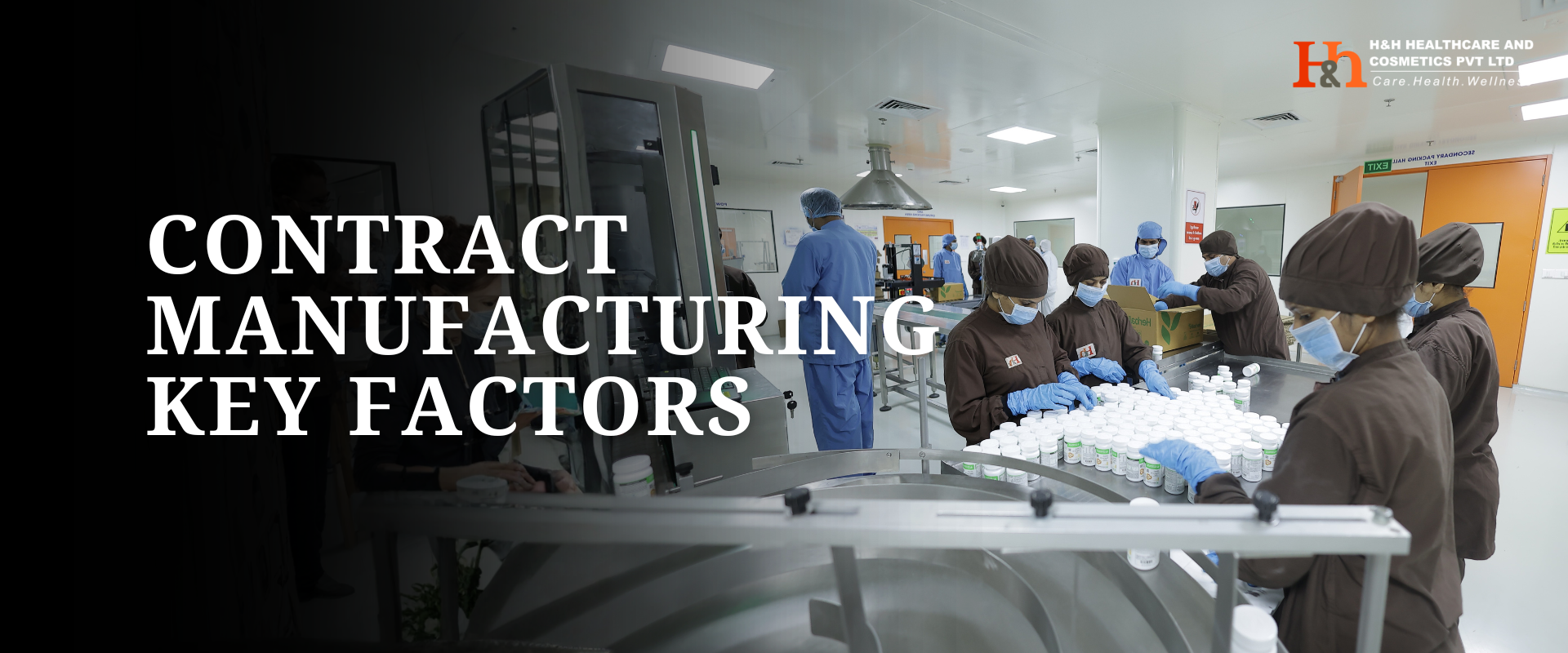
Every wellness brand confronts the same fundamental decision: build internal manufacturing capacity or partner with specialized producers. For most, the economics prove straightforward—establishing GMP-certified facilities demands USD 5-10 million minimum capital investment, eighteen months construction and validation, ongoing regulatory compliance costs, and permanent overhead regardless of production volumes. Partnering with established manufacturers converts these fixed costs into variable production expenses while accessing proven infrastructure, regulatory expertise, and quality systems requiring years to develop independently. However, partnership quality varies dramatically. Understanding evaluation criteria separating competent vendors from strategic partners determines whether this decision supports brand growth or creates operational constraints limiting market opportunities.
Quality certifications represent minimum partnership prerequisites, not competitive differentiators. ISO 9001:2015 validates systematic quality management, GMP compliance demonstrates pharmaceutical-grade production discipline, and FSSAI registration enables legal Indian market sales. These certifications, while essential, merely indicate baseline operational competence. Advanced evaluation examines how thoroughly manufacturers implement certified systems versus treating them as paperwork exercises satisfying auditors.
Request recent audit reports from certification bodies. Quality-focused manufacturers share these willingly, highlighting nonconformities identified and corrective actions implemented. Facilities treating certifications seriously view external audits as improvement opportunities rather than compliance burdens. Conversely, manufacturers reluctant to discuss audit findings or defensive about identified gaps signal superficial quality commitment despite certification claims.
Regulatory knowledge extends beyond certificates. Can the manufacturer navigate FSSAI health claim restrictions? Do they understand FDA dietary supplement requirements for U.S. exports? What experience exists with European Novel Foods regulations? A contract manufacturing company in India demonstrating multi-market regulatory fluency enables brand expansion across geographies, while facilities understanding only domestic requirements constrain distribution to Indian markets regardless of product quality.
Documentation quality reveals operational maturity. Request sample batch production records, quality specifications, and stability study protocols. Thorough documentation—detailed process parameters, environmental monitoring data, quality checkpoint results, and deviation investigations—indicates systematic quality management. Conversely, minimal paperwork or records lacking critical details suggest documentation created for compliance appearance rather than operational necessity, foreshadowing quality inconsistencies when production issues inevitably arise.
Format versatility matters increasingly as consumer preferences evolve and category innovation accelerates. Brands launching with simple capsule formulations may later require softgels for oil-soluble ingredients, gummies addressing swallowing resistance, or functional beverages integrating supplementation into consumption patterns. Manufacturers offering multiple formats enable product line expansion without partnership changes—substantial advantage avoiding transfer validation costs, formulation adjustments for different equipment, and relationship-building delays when growth demands new capabilities.
Formulation expertise distinguishes manufacturers providing genuine product development collaboration from those merely executing predetermined specifications. Can the manufacturer suggest ingredient combinations addressing specific health applications? Do they maintain relationships with novel ingredient suppliers, providing early access to emerging compounds? What stability testing protocols validate shelf life under realistic storage conditions? These capabilities transform manufacturing partnerships from transactional vendor relationships into strategic collaborations, accelerating time-to-market while reducing formulation risk.
Analytical capabilities determine whether manufacturers can truly validate quality claims or rely entirely on third-party testing, creating delays and information gaps. In-house high-performance liquid chromatography (HPLC) enables active ingredient quantification, gas chromatography detects oxidation markers relevant for oil-based products, and dissolution testing confirms release profiles meeting bioavailability requirements. Manufacturers maintaining these capabilities demonstrate commitment to quality verification rather than dependence on external laboratories potentially incentivized to approve questionable batches maintaining revenue relationships.
Pilot-scale capabilities prove critical during product development. Full-scale production batches—often minimum 50,000-100,000 units—represent substantial financial risk for unproven formulations. Manufacturers offering pilot equipment enabling 1,000-5,000 unit test batches allow market validation before major inventory commitment. This flexibility particularly benefits brands testing new categories, demographic segments, or distribution channels where demand remains uncertain until actual sales data accumulates.
Raw material qualification protocols reveal manufacturing philosophy. Do specifications address merely active ingredient content or extend to heavy metals, microbial limits, pesticide residues, and impurity profiles? How rigorously are suppliers audited and qualified? What testing occurs on incoming materials regardless of certificates of analysis provided? Manufacturers treating raw material quality as supplier responsibility demonstrate reactive quality approaches, catching problems only after affecting finished products. Those implementing independent verification regardless of supplier reputation signal proactive quality commitment, preventing issues rather than detecting them post-occurrence.
In-process controls provide real-time quality monitoring impossible through finished product testing alone. For tablet production, does monitoring include hardness, friability, disintegration time, and weight uniformity? During softgel encapsulation, are ribbon thickness, fill weight, and seal integrity verified continuously? Advanced facilities implement automated monitoring systems providing continuous data streams enabling immediate intervention when parameters drift toward specification limits—preventing entire batches from failing final testing due to undetected mid-production deviations.
Stability testing determines whether products maintain potency and integrity throughout the claimed shelf life under realistic storage conditions. Comprehensive programs expose samples to multiple temperature and humidity conditions—accelerated studies at elevated stress and real-time studies matching actual distribution environments. Manufacturers conducting only accelerated testing demonstrate minimal shelf life validation, while those implementing multi-year real-time programs confirm actual aging characteristics supporting defensible expiration dating, protecting brand reputation and consumer safety.
Change control procedures govern how formulation modifications, process adjustments, or raw material substitutions are evaluated and implemented. Rigorous systems require documented justification, impact assessment on quality attributes, validation testing confirming equivalence, and approval from quality functions before implementation. H&h nutraceutical contract manufacturing services with mature change control prevent well-intentioned improvements from inadvertently compromising quality through insufficient impact evaluation before production-scale deployment.
Minimum order quantities directly affect inventory management and cash flow requirements. Manufacturers requiring 100,000-unit minimums force brands into substantial inventory positions, potentially exceeding three to six months’ sales for emerging products. Those offering 10,000-25,000 unit minimums enable more conservative inventory strategies, reducing obsolescence risk and capital requirements—particularly valuable for brands testing new categories or seasonal promotions where demand remains uncertain.
Lead time consistency affects supply chain planning. Manufacturing requiring sixteen weeks from order placement to delivery creates challenges in responding to demand fluctuations or capitalizing on unexpected opportunities. Six to eight-week lead times provide greater flexibility, maintaining adequate stock without excessive inventory investment. More critical than absolute lead time, however, is consistency—reliable manufacturers deliver within promised windows, enabling accurate planning, while those frequently missing commitments create perpetual fire-fighting, addressing stockouts or rush orders increasing costs.
Capacity availability determines whether partnerships support growth ambitions or become bottlenecks limiting expansion. During initial discussions, manufacturers naturally emphasize the capability handling anticipated volumes. Critical question: What happens when success exceeds projections? Can the manufacturer accommodate 50-100% volume increases without compromising delivery timing or quality? Facilities operating near capacity struggle absorbing growth, requiring brands to either limit sales or urgently seek alternate manufacturers mid-success—precisely when partnership continuity proves most valuable.
Communication quality predicts partnership experience. During evaluation, assess responsiveness, transparency, and problem-solving orientation. Do inquiries receive prompt, substantive responses or delayed generic replies? Are pricing structures clearly explained with no hidden fees emerging later? When issues arise, does the manufacturer acknowledge problems forthrightly and propose solutions, or deflect responsibility? These patterns during courtship intensify once contracts finalize—responsive partners remain so, while difficult relationships deteriorate further once business is secured.
Pricing structures require careful examination beyond per-unit costs. What additional charges apply for packaging materials, label printing, quality testing, batch documentation, or shipping? How are price adjustments handled when raw material costs fluctuate? What payment terms apply—net 30, 50% advance, or something else affecting cash flow? Hidden charges accumulating post-contract create budget surprises, undermining financial planning and eroding profit margins expected based on initial quotations.
Volume pricing influences long-term economics. Manufacturers offering tiered pricing where per-unit costs decline substantially at higher volumes incentivize consolidating production with a single partners. However, brands should verify claimed economies actually materialize—request written quotes at specific volume thresholds rather than accepting verbal assurances about future pricing improvements that may not materialize as promised.
Intellectual property protection deserves explicit contractual attention. Who owns formulations developed collaboratively? What prevents manufacturers from producing identical formulations for competitors? Non-disclosure agreements and exclusivity clauses protect proprietary formulations, though enforcement across international borders presents challenges. Reputable manufacturers recognize that protecting client intellectual property strengthens long-term relationships and include appropriate protection standards in partnership agreements.
Selecting wellness manufacturing partners demands evaluating multiple dimensions simultaneously—regulatory compliance enabling market access, technical capabilities supporting product innovation, quality systems ensuring consistency, operational factors affecting supply chain efficiency, and financial structures determining profitability. No single factor guarantees partnership success, but systematic evaluation across all dimensions identifies facilities genuinely capable of supporting brand ambitions versus those offering merely adequate production services, constraining growth potential.
The decision extends beyond immediate product launch needs. Brands should evaluate whether partners can accommodate future requirements—additional formats, increased volumes, expanded geographic distribution, or enhanced quality documentation supporting health claims. Changing manufacturers mid-growth proves expensive, time-consuming, and risky. Selecting partners capable of scaling alongside brand evolution from inception avoids these disruptions, converting manufacturing from operational concern into competitive advantage through consistent quality enabling brand reputation building and customer loyalty development impossible when supply chain uncertainties undermine product reliability.
Partner with excellence. Launch your branded supplements today.

India’s trusted CDMO Partner, delivering science-driven solutions across healthcare & cosmetics sectors.
© 2026 H&H Healthcare and Cosmetics Pvt. Ltd. Designed by ROI Makers.