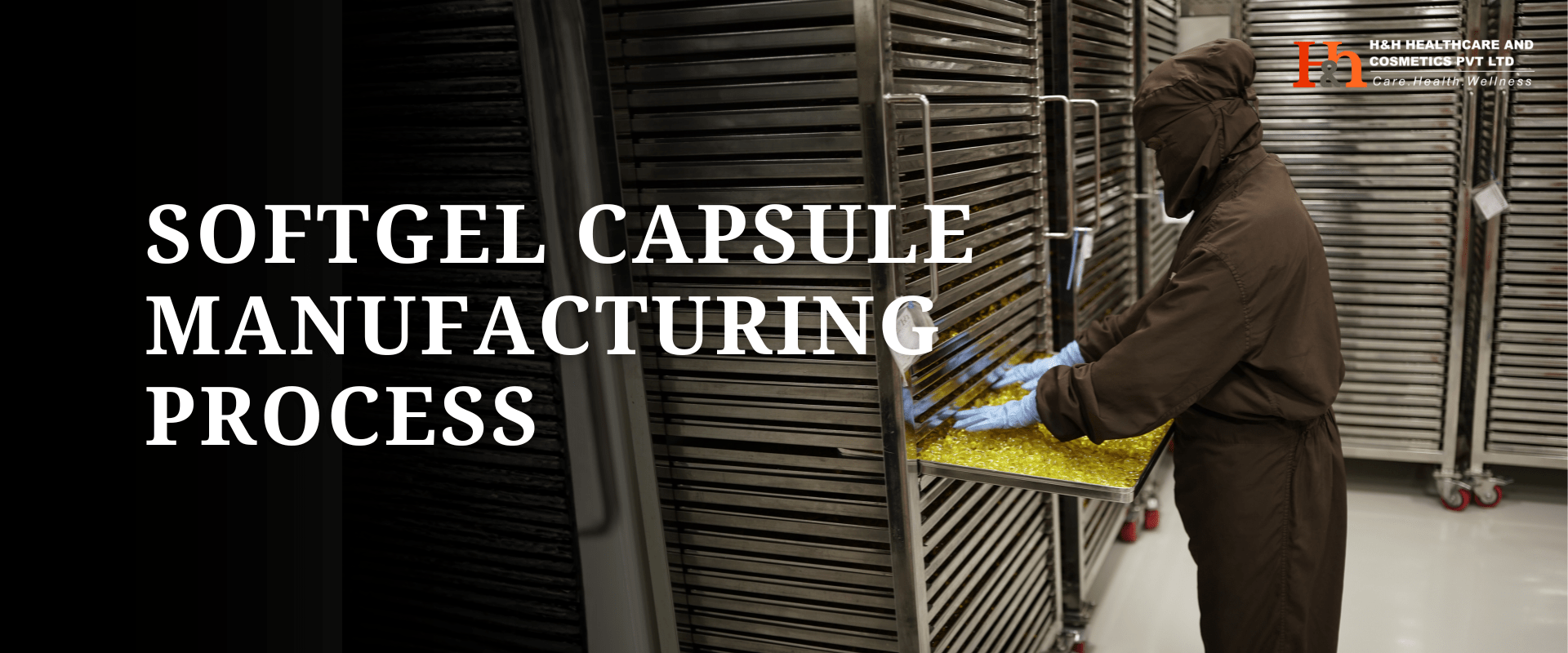
Visit any pharmaceutical facility producing softgels and observe the encapsulation room—temperature-controlled to ±0.5°C, humidity maintained precisely at 35-45%, technicians monitoring ribbon thickness to ensure 0.032-0.040 inch specifications, and inline sensors verifying fill weight accuracy within 2% tolerance every thousandth capsule. This operational precision isn’t excessive caution; it represents the minimum control rigor separating facilities producing compliant products from those achieving pharmaceutical-grade quality. For an industry where dosage accuracy, seal integrity, and shelf stability directly impact consumer safety and therapeutic efficacy, understanding where quality is established—not merely inspected—determines manufacturing competence.
Quality failures in softgel manufacturing frequently originate not during encapsulation but earlier, during fill material preparation. Active pharmaceutical ingredients suspended in oils present particular challenges—particle size distribution affects viscosity and settling behavior, improper solubilization creates concentration gradients producing dosage variability, and air entrapment during mixing generates bubbles compromising capsule integrity.
Consider omega-3 fish oil formulations, among the most commercially significant softgel applications. These polyunsaturated fatty acids oxidize rapidly when exposed to oxygen, creating rancid odors and degraded therapeutic efficacy. Quality-focused facilities implement nitrogen blanketing during mixing—maintaining an inert atmosphere, preventing oxidation—while continuous mixing prevents phase separation that would create non-uniform active ingredient distribution across batches.
Particle size control proves critical for suspensions containing insoluble materials. Large particles—anything failing to pass through 80-mesh screens (approximately 180 microns)—can puncture softgel shells during encapsulation or create seal weaknesses enabling leakage. Advanced manufacturers implement milling protocols, reducing particle size while monitoring size distribution via laser diffraction, ensuring 100% of particulates meet specifications before mixing with carrier oils.
Temperature management during fill preparation affects both processing success and product stability. Most soft gel capsule contract manufacturing operations maintain fill materials between 20-40°C—warm enough to reduce viscosity for proper pumping yet cool enough to prevent thermal degradation of heat-sensitive actives. Exceeding these ranges risks phase separation in emulsions, active ingredient degradation, or viscosity changes affecting metering accuracy during encapsulation.
The gelatin shell determines whether capsules maintain seal integrity throughout shelf life or develop leaks compromising content protection. Bloom strength—a measure of gelatin’s gel-forming capacity—should fall between 150-200 grams for most softgel applications. Lower bloom strength produces weak shells prone to rupture; higher values create brittle capsules susceptible to cracking.
Viscosity represents another critical parameter. At a standard processing temperature of 60°C, properly prepared gelatin mass should exhibit viscosity around 11,000±2,000 centipoises. This range enables the formation of smooth, uniform ribbons while maintaining adequate fluidity for continuous feeding to encapsulation equipment. Deviations signal problems—excessive viscosity indicates incomplete gelatin dissolution or inappropriate plasticizer ratios, while low viscosity suggests dilution or degradation requiring batch rejection before expensive encapsulation attempts.
Plasticizer selection and proportion directly influence capsule flexibility and moisture equilibrium. Glycerin remains the most common choice, typically comprising 20-30% of shell formulation. However, seasonal humidity variations affect optimal ratios—higher ambient humidity requires reduced plasticizer, preventing excessive moisture uptake, producing overly soft capsules, while dry conditions necessitate increased plasticizer, preventing brittleness. Facilities lacking environmental controls or seasonal formulation adjustments produce capsules exhibiting temperature-dependent quality variation.
Degassing removes air bubbles from gelatin mass that would otherwise create visual defects and potential weak points in finished capsules. Vacuum application during melting and mixing eliminates entrapped air, but process effectiveness requires verification. Visual inspection of gelatin mass flowing to ribbon casting should reveal clear, bubble-free liquid—the presence of foam or visible air indicates inadequate degassing requiring process intervention before continuing production.
The rotary die encapsulation process executes multiple operations simultaneously—ribbon formation, fill injection, sealing, and cutting—creating concentrated points where process deviations manifest as quality defects. Understanding critical control points enables systematic monitoring, preventing defect accumulation.
Ribbon thickness directly affects capsule appearance, seal strength, and dissolution characteristics. Target thickness of 0.032-0.040 inches represents optimal balance—thinner ribbons reduce material cost but risk tears and seal weaknesses, while thicker shells waste gelatin and may slow dissolution. Automated thickness monitoring using optical sensors provides continuous verification, triggering alerts when ribbons drift outside specifications, enabling immediate adjustments to casting roll temperature or gelatin flow rate.
Fill weight accuracy ensures dosage uniformity—a regulatory requirement for pharmaceutical applications and quality expectation for wellness products. Modern encapsulation equipment incorporates inline weight checking systems, sampling every thousandth capsule, comparing results against target specifications, and automatically adjusting fill pump stroke length, maintaining accuracy within ±2% tolerance. Facilities lacking automated verification rely on periodic manual sampling, creating windows where out-of-specification capsules continue production undetected.
The temperature and pressure affect seal quality. Insufficient heat or pressure produces weak seals prone to leakage, while excessive values create thick seams, visible defects, and potential shell damage. The softgel capsule manufacturing process requires continuous monitoring of die roll temperature via embedded sensors and periodic seal strength verification through burst testing—applying pressure until capsules rupture, with failure points indicating seal integrity levels.
Environmental control within encapsulation rooms prevents quality issues stemming from ambient condition variations. Temperature fluctuations affect gelatin ribbon properties—cooler conditions increase viscosity, reducing flowability, while warmer environments decrease shell integrity. Similarly, humidity changes alter ribbon moisture content, affecting flexibility and seal characteristics. Dedicated HVAC systems maintaining ±1°C temperature stability and ±5% relative humidity control eliminate these variables, enabling consistent production across shifts and seasons.
Freshly encapsulated softgels contain 25-30% moisture—far exceeding the 6-9% target for shelf-stable products. Moisture reduction occurs through controlled drying, preventing surface cracking while achieving uniform final moisture content throughout the capsule mass.
Tray drying represents the industry standard—spreading capsules in single layers on perforated trays within humidity and temperature-controlled rooms. Initial drying occurs at higher humidity (50-60% RH), preventing rapid surface moisture loss that would create hard shells encasing wet interiors. Gradual humidity reduction over 24-72 hours enables moisture migration from capsule centers to surfaces where evaporation occurs, achieving uniform final moisture without shell damage.
Tumble drying provides an alternative approach—placing capsules in rotating drums with controlled air flow. This method offers faster throughput and reduced floor space requirements but demands careful monitoring, preventing capsule-to-capsule impacts and creating surface damage. Quality-focused facilities utilize both methods—initial tumble drying for rapid bulk moisture reduction followed by tray drying for final conditioning, ensuring uniformity.
Moisture content verification occurs at multiple points. In-process testing during drying tracks moisture reduction curves, identifying when capsules reach target specifications. Final testing before packaging confirms uniform moisture distribution across the entire batch—sampling from multiple tray positions or drum segments, ensuring no pockets of under-dried or over-dried material escape detection. Karl Fischer titration provides gold-standard moisture quantification, though some facilities employ rapid NIR spectroscopy for high-throughput screening with periodic titration verification.
Despite process controls, defect generation remains inevitable at production scales exceeding millions of capsules daily. Systematic inspection protocols identify and eliminate defective units before packaging.
Visual inspection examines multiple attributes simultaneously—seal integrity (weak seams, partial seals), dimensional accuracy (misshapen capsules, size variations), surface quality (wrinkles, dimples, discoloration), and fill visibility (bubbles, phase separation, incomplete filling). Manual inspection proves impractical at modern production volumes, driving adoption of automated vision systems utilizing high-resolution cameras and image analysis algorithms detecting defects invisible to human operators, conducting rapid sorting.
Weight verification catches fill quantity errors and some shell defects. Under-filled capsules weigh less than specifications, while leaking units lose fill material, reducing total weight. Automated check-weighers reject out-of-specification units, though this method cannot distinguish between fill quantity errors and shell defects—both require investigation to determine root causes.
Seal strength testing destroys representative samples, confirming the manufacturing process maintains adequate sealing parameters. Burst testing applies increasing pressure until capsules rupture, with failure pressure indicating seal quality. Consistent values across production batches validate process stability, while declining trends signal emerging issues requiring investigation before widespread quality failures occur.
Dissolution testing verifies that capsules release contents appropriately under simulated digestive conditions. Pharmaceutical applications require validated dissolution methods demonstrating consistent release profiles across batches. While wellness products face less stringent requirements, dissolution testing provides objective evidence that formulation and manufacturing variables haven’t compromised bioavailability—data increasingly valuable as consumers demand efficacy substantiation.
Quality in softgel manufacturing isn’t achieved through final inspection but built systematically at each process stage—properly prepared fill materials, correctly formulated gelatin mass, precisely controlled encapsulation, appropriate drying protocols, and comprehensive defect detection. Facilities demonstrating mastery across all dimensions produce capsules meeting pharmaceutical specifications regardless of application, while those with gaps in any area generate quality inconsistencies constraining market opportunities.
For brands evaluating potential manufacturing partners, understanding these control points enables informed assessment. Facilities should demonstrate not merely the capability to produce softgels but systematic processes ensuring every batch meets specifications. This distinction separates manufacturers offering transactional production services from those delivering strategic partnerships supporting brand growth through unwavering quality consistency—exactly what discerning wellness consumers increasingly demand as market sophistication progresses.
Partner with excellence. Launch your branded supplements today.

India’s trusted CDMO Partner, delivering science-driven solutions across healthcare & cosmetics sectors.
© 2026 H&H Healthcare and Cosmetics Pvt. Ltd. Designed by ROI Makers.