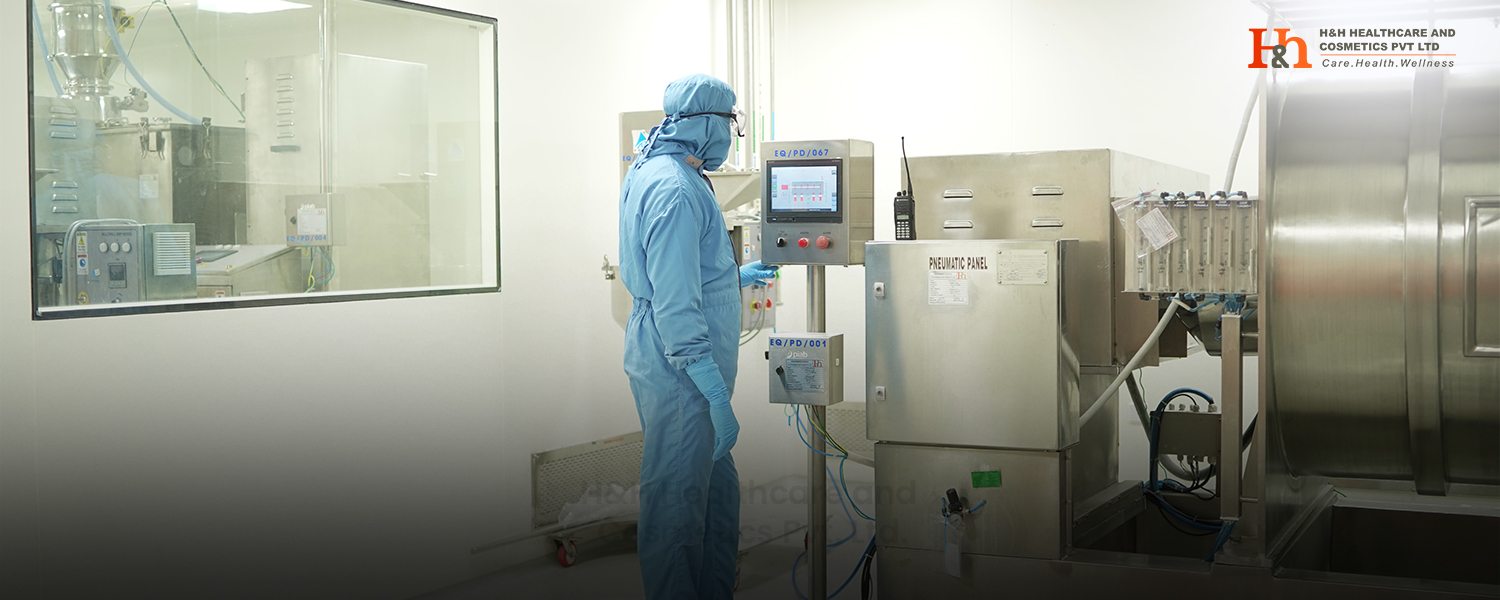
In today’s rapidly evolving health and wellness sector, manufacturers are under intense pressure to deliver high-quality nutraceutical products that meet stringent regulatory standards and consumer expectations. The role of contract manufacturing partnerships has grown in importance, enabling brands to scale efficiently while retaining oversight of quality, potency, and safety. Ensuring batch-to-batch consistency in nutraceutical production isn’t merely a best practice—it’s a strategic imperative for reputation, regulatory compliance, and market success.
When a brand engages in nutraceutical contract manufacturing services, one of the principal quality metrics it must evaluate is batch consistency. Batch consistency means that every production run of a formulation delivers identical potency, composition, purity, and performance. Studies show that manufacturing facilities across regions have achieved mean batch consistency rates of 98.5% in North America, versus 93.2% in Asia—highlighting how raw materials, process controls, and supplier variability can significantly impact outcomes.
Engaging a partner with proven nutraceutical contract manufacturing capabilities enables brands to leverage validated systems, documented standard operating procedures (SOPs), and state-of-the-art process analytical technologies. For instance, real-time monitoring of critical process parameters (CPPs) and critical quality attributes (CQAs) via automation helps reduce human error variation.
The foundation of batch consistency lies in consistent raw material inputs. In a contract manufacturing facility, whether partnering specifically with H&H Nutraceuticals for their nutraceutical contract manufacturing services or another provider, the supplier pool must be rigorously qualified. Certificates of analysis (COAs) for each lot should be reviewed, and any botanical, mineral, or extract ingredient must meet tight specification bands for potency, purity, and particle size. Variability in raw material specifications has repeatedly been identified as a key driver of batch-to-batch inconsistency.
Once inputs are consistent, the manufacturing process itself must eliminate variation. This means SOPs, equipment calibration, environmental control (humidity, temperature, particulate levels), and validated steps for mixing, granulation, encapsulation, tableting, or liquid fill must be in place. For example, excess humidity in a tablet operation can lead to inconsistent drying and coating, thus reducing the predictability of output. Automation and real-time instrumentation further reduce process drift, enabling contract manufacturers to deliver batches that match specifications closely.
Even with sound inputs and well-controlled processes, thorough monitoring is required. Each batch must be subject to in-process checks (e.g., blend uniformity, weight variation, moisture content) and final testing (e.g., assay, dissolution, microbiology, heavy metals). Without rigorous quality assurance, even subtle deviations accumulate to impair consistency. One industry reference noted that many supplement recalls are attributed to inconsistent ingredient levels across batches.
Traceability is non-negotiable. In a mature contract manufacturing relationship—such as with H&H’s nutraceutical contract manufacturing services—every batch is assigned a unique identifier, from raw-material lot to final product code. Comprehensive manufacturing batch records, deviation logs, CAPA (corrective and preventive actions), and change-control systems enable root-cause analyses if variation occurs. Continuous improvement programs ensure that variations are not tolerated but systematically analyzed and corrected.
For brand owners utilizing nutraceutical contract manufacturing, selecting a partner that invests in scalable infrastructure and quality-centric culture is critical. The ideal partner offers flexibility in batch size while maintaining identical output quality. The partnership approach should emphasize shared metrics for consistency, lead-time, regulatory support, and cost-efficiency.
Advanced ERP systems tailored for nutraceutical manufacture enable better control over formulation, traceability, production workflow, and lot record management. According to industry sources, these systems contribute significantly to maintaining consistency and compliance.
Conclusion
Maintaining batch consistency in nutraceutical manufacturing facilities demands a holistic approach—from raw materials to finished product, process to documentation, partner selection to technology stack. By partnering with a trusted provider like H&H for their nutraceutical contract manufacturing services, brands gain access to validated processes, deep quality expertise, and scalable capacity. In an industry where consumer trust, regulatory scrutiny, and product performance intersect, consistency isn’t optional—it’s the cornerstone of sustainable growth and brand integrity.
Partner with excellence. Launch your branded supplements today.

India’s trusted CDMO Partner, delivering science-driven solutions across healthcare & cosmetics sectors.
© 2026 H&H Healthcare and Cosmetics Pvt. Ltd. Designed by ROI Makers.